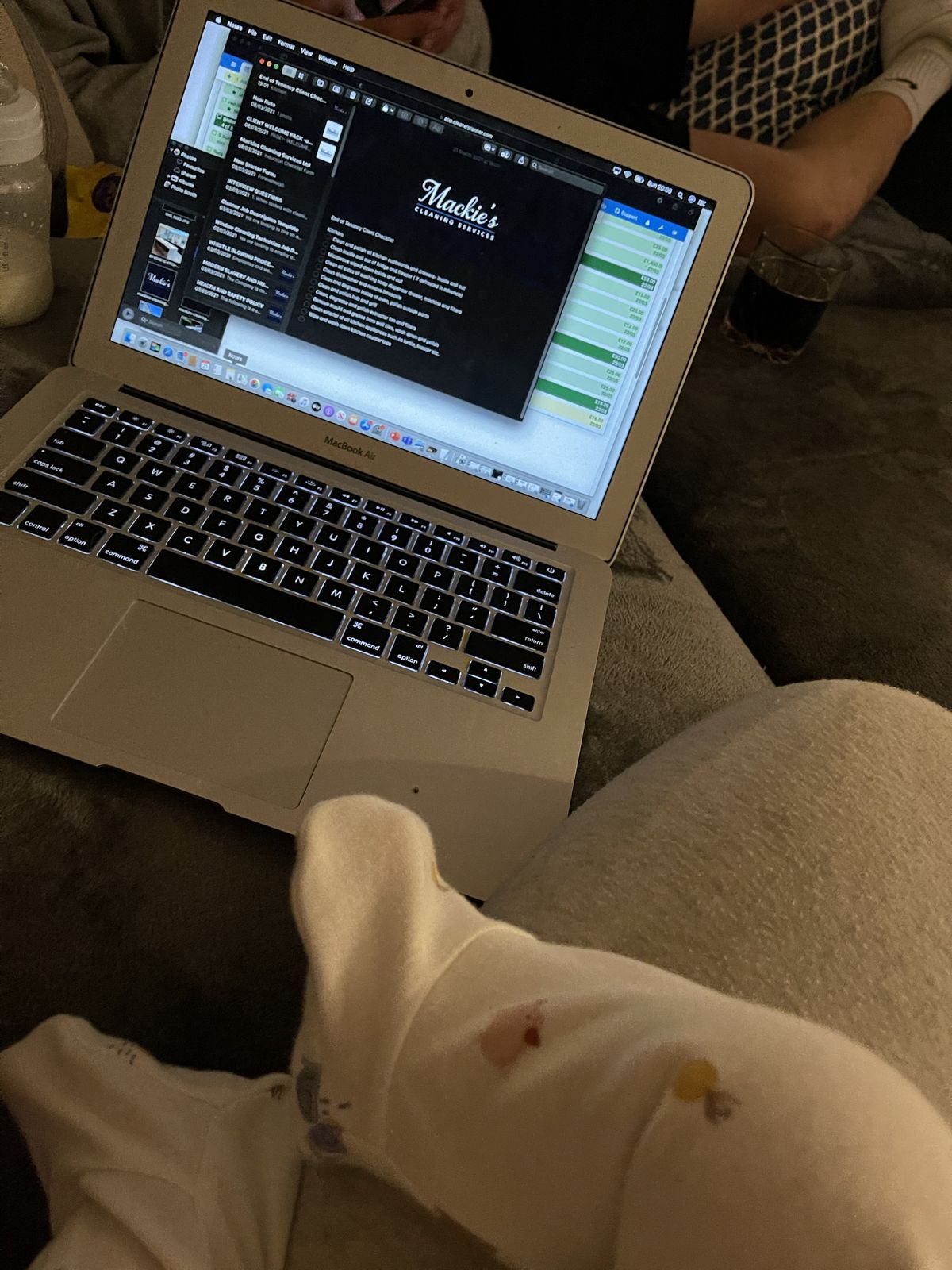

If you’re reading this at 11pm, after a full day of cleaning, with a rota still to sort and three unanswered messages from customers, this one’s for you.
Burnout in cleaning business owners is incredibly common, and hardly anyone talks about it. We’re in an industry built on looking after other people’s spaces, and most of us are terrible at looking after ourselves.
I know that feeling well. A few years ago, I was working fourteen-hour days at Mackies with three little ones at home. I was covering every sick day and every no-show, and cleaning every day myself because I wasn’t sure I could afford not to. Things slipped. Complaints came in. We lost three major contracts, and the business lost £60,000 that year.
Burnout didn’t just cost me my energy. It cost the business. So I want to talk about it properly: why it happens, how to spot it, and what actually helps.
The signs you might be burning out
Burnout rarely arrives all at once. It creeps in. Here are some of the signs:
The signs
- You dread your phone. Every notification feels like another problem.
- You’re exhausted even after a day off, if you ever take one.
- Small problems feel enormous. A cancelled clean ruins your whole day.
- You’ve stopped enjoying the parts you used to love.
- You’re snapping at your team, your customers or your family.
- You can’t switch off. You’re thinking about the business in the shower, at dinner and at 3am.
- You’re making more mistakes, like forgetting things and double-booking.
- You fantasise about just walking away from the whole thing.
It’s not a sign you’re weak or bad at business. It’s a sign your business is asking more of you than any one person can give.
Why cleaning business owners burn out
In my experience, burnout in this industry almost always comes from the same few places.
You’re the backup plan for everything
When a cleaner calls in sick, you cover. When a customer complains, you deal with it. When a new starter needs training, you do it. When something breaks, you fix it.
Being the backup plan means you can never really be off. Your whole business rests on you being available, all the time.
You’re working hard for too little money
Burnout and underpricing go hand in hand. When your prices are too low, you have to do more cleans to earn enough. You can’t afford help, so you do everything yourself. You can’t build a cash buffer, so every quiet week feels like an emergency.
Hard work you’re fairly paid for is tiring. Hard work you’re not fairly paid for is exhausting in a completely different way.
You have no boundaries
Customers message at 10pm, and you reply. Cleaners text on Sunday morning, and you sort it. Someone asks for a favour, and you say yes.
Every one of those feels small. Together, they mean the business owns every hour of your day.
It’s lonely
Your friends and family don’t always understand the pressure. Your team works for you, so you can’t really lean on them. And you’re making every decision on your own.
What to do this week
You don’t need to fix everything at once. Start by stopping the bleeding.
1. Set your business hours, and tell people
Decide when you’re available. For example, Monday to Friday, 8am to 6pm. Then set up an auto-reply for messages outside those hours:
Your auto-reply
“Thanks for your message! Our office hours are Monday to Friday, 8am–6pm. We’ll get back to you first thing. If you’re a customer and your clean is due today, please call [number].”
Most customers are completely fine with this. What they want is to know when they’ll hear back.
2. Write down everything you’re carrying
Get it all out of your head and onto paper: every task, every worry, every unfinished job. Then sort it:
Sort it into
- Must be done by me this week
- Could be done by someone else
- Can wait
- Doesn’t actually need doing
You’ll usually find the first list is much shorter than it felt.
3. Build a cover list
Stop being the automatic cover for every sick day. Make a list of cleaners willing to pick up extra hours at short notice. Even two or three names make a massive difference. When someone calls in sick, work down the list before you reach for your own gloves.
4. Let go of your most draining customer
Almost every business has one customer who takes far more energy than they’re worth. They complain about everything, change their clean constantly, or pay late every time.
Give them notice kindly and professionally:
What to say
“Hi Karen, I wanted to let you know that we’re making some changes to our schedule, and unfortunately we won’t be able to continue your cleans after the end of next month. I’m happy to recommend another local cleaner if that would help. Thank you for being with us.”
The relief is almost always worth far more than the lost income.
5. Take one full day off
Put it in the diary and protect it like a customer’s clean: no messages, no rota and no quick checks. If that feels impossible right now, that’s exactly why you need it.
What to fix over the next 90 days
Once you’ve created a little breathing space, fix the things causing the burnout in the first place.
Fix your pricing
If your business isn’t making enough profit, you’ll never be able to afford the help that gets you out of burnout. Work out what an hour of cleaning really costs you, and price to make proper profit. There’s a full walkthrough in Stop using industry standards if you want to win.
Stop being the backup plan
Your first key hire should take the load that burns you out, not just add more cleaning capacity. For many owners, that’s a senior cleaner who can cover and supervise. For others, it’s a few hours of admin support. See Who to hire first as you grow your cleaning business for how to decide.
Write things down
Every process that only exists in your head is something that has to come back to you. Start with the jobs that interrupt you most, like sickness cover, new customer set-up and complaints. Build the boring business walks through how.
Build your cash buffer
Cash worries are one of the heaviest things business owners carry. Aim to build up at least one month of wages and fixed costs, set aside, so one late payment or quiet week doesn’t turn into panic.
Find your people
Find other cleaning business owners who get it. Just being able to say “this week has been awful” to someone who understands takes a lot of weight off.
When it’s more than tired
Burnout can overlap with anxiety and depression, and sometimes it’s hard to tell the difference. If you’ve felt low, anxious or unable to cope for more than a couple of weeks, please speak to your GP.
If you’re struggling to cope right now
You can call Samaritans for free, any time, on 116 123.
Looking after yourself isn’t a distraction from running your business. You are the business, at least for now. It can’t be healthy if you’re not.
You didn’t start a business to feel like this
Most of us started our cleaning businesses for more freedom, more money, and more time with the people we love. If the business has taken all three, that’s not a reason to give up. It’s a sign the business needs to be built differently.
After my worst year, I stopped trying to hold everything together through sheer effort. I started building the systems, training and numbers that meant the business didn’t depend on me being everywhere at once. That work is what Cadi is built on.
Cadi is being built to take the weight off: your money in one clear weekly view, your team’s training in one place, and a plan so you’re not carrying every decision in your head.
It launches soon for UK cleaning businesses. Join the waitlist to be first in.
Rhianna